WAKE! For the Sun, who scatter'd into flight The Stars before him from the Field of Night, Drives Night along with them from Heav'n, and strikes The Sultan's Turret with a Shaft of Light.
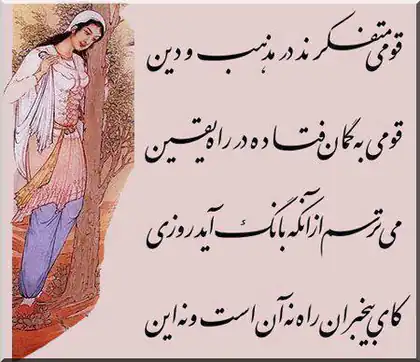
Before the phantom of False morning died, Me thought a Voice within the Tavern cried, "When all the Temple is prepared within, "Why nods the drowsy Worshiper outside?"
And, as the Cock crew, those who stood before The Tavern shouted—"Open then the Door! "You know how little while we have to stay, And, once departed, may return no more."
Now the New Year reviving old Desires, The thoughtful Soul to Solitude retires, Where the WHITE HAND OF MOSES on the Bough Puts out, and Jesus from the Ground suspires.
Iram indeed is gone with all his Rose, And Jamshyd's Sev'n-ring'd Cup where no one knows; But still a Ruby kindles in the Vine, And many a Garden by the Water blows.
And David's lips are lockt; but in divine High-piping Pehlevi, with "Wine! Wine! Wine! "Red Wine!"—the Nightingale cries to the Rose That sallow cheek of hers to' incarnadine.
Come, fill the Cup, and in the fire of Spring Your Winter garment of Repentance fling: The Bird of Time has but a little way To flutter—and the Bird is on the Wing.
Whether at Naishapur or Babylon, Whether the Cup with sweet or bitter run, The Wine of Life keeps oozing drop by drop, The Leaves of Life keep falling one by one.
Each Morn a thousand Roses brings, you say: Yes, but where leaves the Rose of Yesterday? And this first Summer month that brings the Rose Shall take Jamshyd and Kaikobad away.
Well, let it take them! What have we to do With Kaikobad the Great, or Kaikhosru? Let Zal and Rustum bluster as they will, Or Hatim call to Supper—heed not you.
With me along the strip of Herbage strown That just divides the desert from the sown, Where name of Slave and Sultan is forgot— And Peace to Mahmud on his golden Throne!
A Book of Verses underneath the Bough, A Jug of Wine, a Loaf of Bread—and Thou Beside me singing in the Wilderness— Oh, Wilderness were Paradise enow!
Some for the Glories of This World; and some Sigh for the Prophet's Paradise to come; Ah, take the Cash, and let the Credit go, Nor heed the rumble of a distant Drum!
Look to the blowing Rose about us—"Lo, Laughing," she says, "into the world I blow, At once the silken tassel of my Purse Tear, and its Treasure on the Garden throw."
And those who husbanded the Golden grain, And those who flung it to the winds like Rain, Alike to no such aureate Earth are turn'd As, buried once, Men want dug up again.
The Worldly Hope men set their Hearts upon Turns Ashes—or it prospers; and anon, Like Snow upon the Desert's dusty Face, Lighting a little hour or two—is gone.
Think, in this batter'd Caravanserai Whose Portals are alternate Night and Day, How Sultan after Sultan with his Pomp Abode his destined Hour, and went his way.
They say the Lion and the Lizard keep The courts where Jamshyd gloried and drank deep: And Bahram, that great Hunter—the Wild Ass Stamps o'er his Head, but cannot break his Sleep.
I sometimes think that never blows so red The Rose as where some buried Caesar bled; That every Hyacinth the Garden wears Dropt in her Lap from some once lovely Head.
And this reviving Herb whose tender Green Fledges the River-Lip on which we lean— Ah, lean upon it lightly! for who knows From what once lovely Lip it springs unseen!
Ah, my Beloved, fill the Cup that clears TO-DAY of past Regrets and future Fears: To-morrow—Why, To-morrow I may be Myself with Yesterday's Sev'n thousand Years.
For some we loved, the loveliest and the best That from his Vintage rolling Time hath prest, Have drunk their Cup a Round or two before, And one by one crept silently to rest.
And we, that now make merry in the Room They left, and Summer dresses in new bloom, Ourselves must we beneath the Couch of Earth Descend—ourselves to make a Couch—for whom?
Ah, make the most of what we yet may spend, Before we too into the Dust descend; Dust into Dust, and under Dust to lie, Sans Wine, sans Song, sans Singer, and—sans End!
Alike for those who for TO-DAY prepare, And those that after some TO-MORROW stare, A Muezzin from the Tower of Darkness cries, "Fools! your Reward is neither Here nor There."
Why, all the Saints and Sages who discuss'd Of the Two Worlds so wisely—they are thrust Like foolish Prophets forth; their Words to Scorn Are scatter'd, and their Mouths are stopt with Dust.
Myself when young did eagerly frequent Doctor and Saint, and heard great argument About it and about: but evermore Came out by the same door where in I went.
With them the seed of Wisdom did I sow, And with mine own hand wrought to make it grow; And this was all the Harvest that I reap'd— "I came like Water, and like Wind I go."
Into this Universe, and Why not knowing Nor Whence, like Water willy-nilly flowing; And out of it, as Wind along the Waste, I know not Whither, willy-nilly blowing.
What, without asking, hither hurried Whence? And, without asking, Whither hurried hence! Oh, many a Cup of this forbidden Wine Must drown the memory of that insolence!
Up from Earth's Center through the Seventh Gate I rose, and on the Throne of Saturn sate, And many a Knot unravel'd by the Road; But not the Master-knot of Human Fate.
There was the Door to which I found no Key; There was the Veil through which I might not see: Some little talk awhile of ME and THEE There was—and then no more of THEE and ME.
Earth could not answer; nor the Seas that mourn In flowing Purple, of their Lord Forlorn; Nor rolling Heaven, with all his Signs reveal'd And hidden by the sleeve of Night and Morn.
Then of the THEE IN ME who works behind The Veil, I lifted up my hands to find A lamp amid the Darkness; and I heard, As from Without—"THE ME WITHIN THEE BLIND!"
Then to the Lip of this poor earthen Urn I lean'd, the Secret of my Life to learn: And Lip to Lip it murmur'd—"While you live, "Drink!—for, once dead, you never shall return."
I think the Vessel, that with fugitive Articulation answer'd, once did live, And drink; and Ah! the passive Lip I kiss'd, How many Kisses might it take—and give!
For I remember stopping by the way To watch a Potter thumping his wet Clay: And with its all-obliterated Tongue It murmur'd—"Gently, Brother, gently, pray!"
And has not such a Story from of Old Down Man's successive generations roll'd Of such a clod of saturated Earth Cast by the Maker into Human mold?
And not a drop that from our Cups we throw For Earth to drink of, but may steal below To quench the fire of Anguish in some Eye There hidden—far beneath, and long ago.
As then the Tulip for her morning sup Of Heav'nly Vintage from the soil looks up, Do you devoutly do the like, till Heav'n To Earth invert you—like an empty Cup.
Perplext no more with Human or Divine, To-morrow's tangle to the winds resign, And lose your fingers in the tresses of The Cypress-slender Minister of Wine.
And if the Wine you drink, the Lip you press, End in what All begins and ends in—Yes; Think then you are TO-DAY what YESTERDAY You were—TO-MORROW you shall not be less.
So when that Angel of the darker Drink At last shall find you by the river-brink, And, offering his Cup, invite your Soul Forth to your Lips to quaff—you shall not shrink.
Why, if the Soul can fling the Dust aside, And naked on the Air of Heaven ride, Were't not a Shame—were't not a Shame for him In this clay carcass crippled to abide?
'Tis but a Tent where takes his one day's rest A Sultan to the realm of Death addrest; The Sultan rises, and the dark Ferrash Strikes, and prepares it for another Guest.
And fear not lest Existence closing your Account, and mine, should know the like no more; The Eternal Saki from that Bowl has pour'd Millions of Bubbles like us, and will pour.
When You and I behind the Veil are past, Oh, but the long, long while the World shall last, Which of our Coming and Departure heeds As the Sea's self should heed a pebble-cast.
A Moment's Halt—a momentary taste Of BEING from the Well amid the Waste— And Lo!—the phantom Caravan has reach'd The NOTHING it set out from—Oh, make haste!
Would you that spangle of Existence spend About THE SECRET—quick about it, Friend! A Hair perhaps divides the False from True— And upon what, prithee, may life depend?
A Hair perhaps divides the False and True; Yes; and a single Alif were the clue— Could you but find it—to the Treasure-house, And peradventure to THE MASTER too;
Whose secret Presence through Creation's veins Running Quicksilver-like eludes your pains; Taking all shapes from Mah to Mahi and They change and perish all—but He remains;
A moment guessed—then back behind the Fold Immerst of Darkness round the Drama roll'd Which, for the Pastime of Eternity, He doth Himself contrive, enact, behold.
But if in vain, down on the stubborn floor Of Earth, and up to Heav'n's unopening Door, You gaze TO-DAY, while You are You—how then TO-MORROW, when You shall be You no more?
Waste not your Hour, nor in the vain pursuit Of This and That endeavor and dispute; Better be jocund with the fruitful Grape Than sadden after none, or bitter, Fruit.
You know, my Friends, with what a brave Carouse I made a Second Marriage in my house; Divorced old barren Reason from my Bed, And took the Daughter of the Vine to Spouse.
For "Is" and "Is-not" though with Rule and Line And "UP-AND-DOWN" by Logic I define, Of all that one should care to fathom, I was never deep in anything but—Wine.
Ah, by my Computations, People say, Reduce the Year to better reckoning?—Nay, 'Twas only striking from the Calendar Unborn To-morrow and dead Yesterday.
And lately, by the Tavern Door agape, Came shining through the Dusk an Angel Shape Bearing a Vessel on his Shoulder; and He bid me taste of it; and 'twas—the Grape!
The Grape that can with Logic absolute The Two-and-Seventy jarring Sects confute: The sovereign Alchemist that in a trice Life's leaden metal into Gold transmute;
The mighty Mahmud, Allah-breathing Lord, That all the misbelieving and black Horde Of Fears and Sorrows that infest the Soul Scatters before him with his whirlwind Sword.
Why, be this Juice the growth of God, who dare Blaspheme the twisted tendril as a Snare? A Blessing, we should use it, should we not? And if a Curse—why, then, Who set it there?
I must abjure the Balm of Life, I must, Scared by some After-reckoning ta'en on trust, Or lured with Hope of some Diviner Drink, To fill the Cup—when crumbled into Dust!
Of threats of Hell and Hopes of Paradise! One thing at least is certain—This Life flies; One thing is certain and the rest is Lies; The Flower that once has blown for ever dies.
Strange, is it not? that of the myriads who Before us pass'd the door of Darkness through, Not one returns to tell us of the Road, Which to discover we must travel too.
The Revelations of Devout and Learn'd Who rose before us, and as Prophets burn'd, Are all but Stories, which, awoke from Sleep They told their comrades, and to Sleep return'd.
I sent my Soul through the Invisible, Some letter of that After-life to spell: And by and by my Soul return'd to me, And answer'd "I Myself am Heav'n and Hell:"
Heav'n but the Vision of fulfill'd Desire, And Hell the Shadow from a Soul on fire, Cast on the Darkness into which Ourselves, So late emerged from, shall so soon expire.
We are no other than a moving row Of Magic Shadow-shapes that come and go Round with the Sun-illumined Lantern held In Midnight by the Master of the Show;
But helpless Pieces of the Game He plays Upon this Chequer-board of Nights and Days; Hither and thither moves, and checks, and slays, And one by one back in the Closet lays.
The Ball no question makes of Ayes and Noes, But Here or There as strikes the Player goes; And He that toss'd you down into the Field, He knows about it all—HE knows—HE knows!
The Moving Finger writes; and, having writ, Moves on: nor all your Piety nor Wit Shall lure it back to cancel half a Line, Nor all your Tears wash out a Word of it.
And that inverted Bowl they call the Sky, Whereunder crawling coop'd we live and die, Lift not your hands to It for help—for It As impotently moves as you or I.
With Earth's first Clay They did the Last Man knead, And there of the Last Harvest sow'd the Seed: And the first Morning of Creation wrote What the Last Dawn of Reckoning shall read.
YESTERDAY This Day's Madness did prepare; TO-MORROW's Silence, Triumph, or Despair: Drink! for you not know whence you came, nor why: Drink! for you know not why you go, nor where.
I tell you this—When, started from the Goal, Over the flaming shoulders of the Foal Of Heav'n Parwin and Mushtari they flung, In my predestined Plot of Dust and Soul.
The Vine had struck a fiber: which about It clings my Being—let the Dervish flout; Of my Base metal may be filed a Key That shall unlock the Door he howls without.
And this I know: whether the one True Light Kindle to Love, or Wrath consume me quite, One Flash of It within the Tavern caught Better than in the Temple lost outright.
What! out of senseless Nothing to provoke A conscious Something to resent the yoke Of unpermitted Pleasure, under pain Of Everlasting Penalties, if broke!
What! from his helpless Creature be repaid Pure Gold for what he lent him dross-allay'd— Sue for a Debt he never did contract, And cannot answer—Oh the sorry trade!
Oh Thou, who didst with pitfall and with gin Beset the Road I was to wander in, Thou wilt not with Predestined Evil round Enmesh, and then impute my Fall to Sin!
Oh Thou, who Man of baser Earth didst make, And ev'n with Paradise devise the Snake: For all the Sin wherewith the Face of Man Is blacken'd—Man's forgiveness give—and take!
As under cover of departing Day Slunk hunger-stricken Ramazan away, Once more within the Potter's house alone I stood, surrounded by the Shapes of Clay.
Shapes of all Sorts and Sizes, great and small, That stood along the floor and by the wall; And some loquacious Vessels were; and some Listen'd perhaps, but never talk'd at all.
Said one among them—"Surely not in vain My substance of the common Earth was ta'en And to this Figure molded, to be broke, Or trampled back to shapeless Earth again."
Then said a Second—"Ne'er a peevish Boy Would break the Bowl from which he drank in joy; And He that with his hand the Vessel made Will surely not in after Wrath destroy."
After a momentary silence spake Some Vessel of a more ungainly Make; "They sneer at me for leaning all awry: What! did the Hand then of the Potter shake?"
Whereat some one of the loquacious Lot— I think a Sufi pipkin—waxing hot— "All this of Pot and Potter—Tell me then, Who is the Potter, pray, and who the Pot?"
"Why," said another, "Some there are who tell Of one who threatens he will toss to Hell The luckless Pots he marr'd in making—Pish! He's a Good Fellow, and 'twill all be well."
"Well," murmured one, "Let whoso make or buy, My Clay with long Oblivion is gone dry: But fill me with the old familiar Juice, Methinks I might recover by and by."
So while the Vessels one by one were speaking, The little Moon look'd in that all were seeking: And then they jogg'd each other, "Brother! Brother! Now for the Porter's shoulders' knot a-creaking!"
Ah, with the Grape my fading life provide, And wash the Body whence the Life has died, And lay me, shrouded in the living Leaf, By some not unfrequented Garden-side.
That ev'n buried Ashes such a snare Of Vintage shall fling up into the Air As not a True-believer passing by But shall be overtaken unaware.
Indeed the Idols I have loved so long Have done my credit in this World much wrong: Have drown'd my Glory in a shallow Cup, And sold my reputation for a Song.
Indeed, indeed, Repentance oft before I swore—but was I sober when I swore? And then and then came Spring, and Rose-in-hand My thread-bare Penitence apieces tore.
And much as Wine has play'd the Infidel, And robb'd me of my Robe of Honor—Well, I wonder often what the Vintners buy One half so precious as the stuff they sell.
Yet Ah, that Spring should vanish with the Rose! That Youth's sweet-scented manuscript should close! The Nightingale that in the branches sang, Ah whence, and whither flown again, who knows!
Would but the Desert of the Fountain yield One glimpse—if dimly, yet indeed, reveal'd, To which the fainting Traveler might spring, As springs the trampled herbage of the field!
Would but some winged Angel ere too late Arrest the yet unfolded Roll of Fate, And make the stern Recorder otherwise Enregister, or quite obliterate!
Ah Love! could you and I with Him conspire To grasp this sorry Scheme of Things entire, Would not we shatter it to bits—and then Re-mold it nearer to the Heart's Desire!
Yon rising Moon that looks for us again— How oft hereafter will she wax and wane; How oft hereafter rising look for us Through this same Garden—and for one in vain!
And when like her, oh Saki, you shall pass Among the Guests Star-scatter'd on the Grass, And in your joyous errand reach the spot Where I made One—turn down an empty Glass!
شاید كمتر كتابی در دنیا مانند مجموعة ترانه های خیام تحسین شده،
مردود و منفور بوده، تحریف شده، بهتان خورده، محكوم گردیده،
حلاجی شده، شهرت عمومی و دنیاگیر پیدا كرده و بالاخره ناشناس مانده
اگر همة كتاب هایی كه راجع به خیام و رباعیاتش نوشته شده جمع آوری شود
تشكیل كتابخانة بزرگی را خواهد داد. ولی كتاب رباعیاتی كه به اسم خیام معروف
است و در دسترس همه می باشد مجموعه ای است كه عمومًا از هشتاد الی هزار و
دویست رباعی كم و بیش در بر دارد؛ اما همة آن ها تقریبًا جنگ مغلوطی از افكار
مختلف را تشكیل می دهند . حالا اگر یكی از این نسخه های رباعیات را از روی
تفریح ورق بزنیم و بخوانیم در آن به افكار متضاد، به مصمون های گوناگون و به
موضوع های قدیم و جدید بر می خوریم؛ بطوریكه اگر یكنفر صد سال عمر كرده
باشد و روزی دو مرتبه كیش و مسلك و عقیدة خود را عوض كرده باشد قادر
بگفتن چنین افكاری نخواهد بود . مضمون این رباعیات روی فلسفه و عقاید مختلف
است از قبیل : الهی، طبیعی، دهری، صوفی، خوشبینی، بدبینی، تناسخی، افیونی،
بنگی، شهوت پرستی، مادی، مرتاضی، لا مذهبی، رندی و قلاشی، خدائی، وافوری .
. . آیا ممكن است یكنفر این همه مراحل و حالات مختلف را پیموده باشد و بالاخره
فیلسوف و ریاضی دان و منجم هم باشد؟ پس تكلیف ما در مقابل این آش در هم
جوش چیست؟ اگر به شرح حال خیام در كتب قدما هم رجوع بكنیم بهمین اختلاف نظر بر می خوریم.
این اختلافی است كه همیشه در اطراف افكار بزرگ روی می دهد . ولی اشتباه مهم
از آنجا ناشی شده كه چنانكه باید خیام شناخته نشده و افسانه هائی كه راجع باو
شایع كرده اند این اشكال را در انتخاب رباعیات او تولید كرده است.
در اینجا ما نمی خواهیم به شرح زندگی خیام بپردازیم و یا حدسیات و گفته های
دیگران را راجع باو تكرار بكنیم. چون صفحات این كتاب خیلی محدود است.
اساس كتاب ما روی یك مشت رباعی فلسفی قرار گرفته است كه باسم خیام، همان
منجم و ریاضی دان بزرگ مشهور است و یا بخطا باو نسبت می دهند ....
مهربد جان میگم کتاب دیگه ای درباره نظرات بزرگان ایران درباره خیام نداری؟ اون کتاب صادق هدایت که گذاشتی خیلی جالب بود.من یکبا بار یکی از دوستان حرف میزدم از یک کتاب مگفت که نظرات بزرگان ایران رو درباره خیام جمع کرده بود و برای یکی اقوامش بود کتاب(میدونم قطعن هست)،روی نت کسی میدونه این کتاب هست یا نه؟ اگر نیست من برم دنبالش( که یکم سخته 😁)
نمیدونم مهربد جان ولی بعید میدونم،چون معلوم نیست منظور از استاد چیه اینجا.میدونم تو اون کتاب مذکور مثلن همین نظر صادق هدایت هست.600-700 صفحه هم باید باشه یا بیشتر بگمونم.
درود بر مهربُد گرامی. تنها بخش­هایی را که بازنویسی نکرده بودی، یا علامتِ سؤال نهاده بود، برمی­رسم. البته توجه داشته باش که ممکن­است بنده هم در اشتباه باشم (ضمنا، من بصورت انگلیسیِ عادی می­نویسم،زحمت بازنویسی­اش با شما . حرف A هنگامی که دُرُشت نوشته شد، نمادِ "آ" است):
قرآن که مهین کلم خوانند آن را - گه گاه نه بر دوام خوانند آن را بر گرد پیاله آیتی هست مقیم - کاندر همه جا مدام خوانند آن را qorAn ke mehin kalAm xAnand AnrA / gahgAh na bar davAm xanand AnrA bar gerde piyale Ayati hast moqim / kandar hame jA modAm xAnand AnrA
گر می نخوری طعنه مزن مستانرا - بنیاد مکن تو حیله و دستانرا تو غره بدان مشو که می می نخوری - صد لقمه خوری که می غلم ست آنرا Gar mey naxory ta’ene mazan mastAn rA / bonyAd makon to hile o dastAn rA To Qarre bedAn masho ke mey mi naxory / sad loqme xory ke mey qolAm ast AnrA (مِی می­نخوری = مِی نِمی­خوری ) ضمنا، غَره با فتحه _َ در اینجا دُرُست­تر می­نماید، زیرا غُرّه به معنایِ صدای رعد و برق است. غَرّه در اینجا یعنی "مغرور و فریفته"
Tarkibe piyâleyi ke darham peyvast - Beškastane ân ravâ nemidârad mast Candin saro pâye nâzanin az saro dast - Az mehr ke peyvasto be kin ke šekast? لخت (مصراع)ِ آخر این­گونه است: Az mehre ke peyvasto be kine ke shekast? یعنی « از روی مهر و علاقه به چه­کسی، این آثارِ هنری (انسان­ها) را به­هم پیوست (آفرید)، و بر اثر کین­جویی با چه کسی دوباره آنها را شکست؟! » (البته شاید علامتِ سؤال را بر مبنایِ بافتارِ شعری نهاده باشی، با این­حال، یک کسرۀ اضافه کم دارد)
Ey âmade az âlame rohâniye? taft? - Heyrân šode dar panjo câhâro šešo haft Mey nuš nadâni ze kojâ âmadeyi - Xoš bâš nadâni be kojâ xâhi raft راست­اش در اینباره، خود-ام مطمئن نیست­ام. اما هر چه باشد، "تفت" باید "قید" باشد و نه نامِ مکانی (که البته شاید این گمان هم نادرست باشد). در رباعیِ دیگری منسوب به خیام آمده: ای آنکه نتیجه ٔ چهار و هفتی وز هفت و چهار دائماً در تفتی می خور که هزار بار بیشت گفتم باز آمدنت نیست چو رفتی رفتی . در اینجا، "تفت" به معنایِ گرما و داغی است. معنایِ دیگرش می­تواند "چابُک" باشد. توصیه می­کنم e را (یعنی کسرۀ اضافه را) بستُری.
In bahr vojud âmade birun ze nehoft - Kas nist ke in gohare tahqiq naseft? Har kas soxani az sare sodâ goftand - Ze ânruzi ke hast kas nemidânad goft لختِ نخست به کسرۀ اضافه نیاز دارد. (این بحرِ وجود)bahre vojud. زیرا به گمانِ من "وجود" را به دریایی تشبیه کرده که آشکار شده است (از نهفت بیرون آمده است) واژه­ی قافیه هم باید nasOft باشد. "سُفتن" واژه­ای است که ریشه­ی پهلوی دارد و در معنایِ "سوراخیدن" است. بنِ مضارع­اش هم "سُنب" است. واژه­ی "سنبه" هم معروف است. فعلا تا همین جا کافی­است. بقیه را بعدا ادامه خواهم داد به­شرطی که بدانم چه­میزان راضی بودی؟!
خواهش را، برای اینکه اشتباه نشود، اگر علامتِ پرسش را برای مشکوک بودن در درستیِ خوانش­ات می­گذاری، درونِ کمانک () یا کروشه [] قرارده که به اشتباه نیفتم. با سپاس.
درود بر مهربُد گرامی. تنها بخشهایی را که بازنویسی نکرده بودی، یا علامتِ سؤال نهاده بود، برمیرسم. البته توجه داشته باش که ممکناست بنده هم در اشتباه باشم (ضمنا، من بصورت انگلیسیِ عادی مینویسم،زحمت بازنویسیاش با شما . حرف A هنگامی که دُرُشت نوشته شد، نمادِ "آ" است):
🌺
درود پژوهنده گرامی، لاتین نویسی آن هیچ دشواریای ندارد، تنها نیاز به خوانش سداها داریم.
قرآن که مهین کلم خوانند آن را - گه گاه نه بر دوام خوانند آن را بر گرد پیاله آیتی هست مقیم - کاندر همه جا مدام خوانند آن را qorAn ke mehin kalAm xAnand AnrA / gahgAh na bar davAm xanand AnrA bar gerde piyale Ayati hast moqim / kandar hame jA modAm xAnand AnrA
گر می نخوری طعنه مزن مستانرا - بنیاد مکن تو حیله و دستانرا تو غره بدان مشو که می می نخوری - صد لقمه خوری که می غلم ست آنرا Gar mey naxory ta’ene mazan mastAn rA / bonyAd makon to hile o dastAn rA To Qarre bedAn masho ke mey mi naxory / sad loqme xory ke mey qolAm ast AnrA (مِی مینخوری = مِی نِمیخوری ) ضمنا، غَره با فتحه _َ در اینجا دُرُستتر مینماید، زیرا غُرّه به معنایِ صدای رعد و برق است. غَرّه در اینجا یعنی "مغرور و فریفته"
هر دو ویراسته و افزوده شدند:
Qorân ke mehin kalâm xânand ânrâ - Gahgâh na bar davâm xanand ânrâ Bar gerde piyâle âyati hast moqim - Kandar hame jâ modâm xânand ânrâ
Tarkibe piyâleyi ke darham peyvast - Beškastane ân ravâ nemidârad mast Candin saro pâye nâzanin az saro dast - Az mehr ke peyvasto be kin ke šekast? لخت (مصراع)ِ آخر اینگونه است: Az mehre ke peyvasto be kine ke shekast? یعنی « از روی مهر و علاقه به چهکسی، این آثارِ هنری (انسانها) را بههم پیوست (آفرید)، و بر اثر کینجویی با چه کسی دوباره آنها را شکست؟! » (البته شاید علامتِ سؤال را بر مبنایِ بافتارِ شعری نهاده باشی، با اینحال، یک کسرۀ اضافه کم دارد)
Ey âmade az âlame rohâniye? taft? - Heyrân šode dar panjo câhâro šešo haft Mey nuš nadâni ze kojâ âmadeyi - Xoš bâš nadâni be kojâ xâhi raft راستاش در اینباره، خود-ام مطمئن نیستام. اما هر چه باشد، "تفت" باید "قید" باشد و نه نامِ مکانی (که البته شاید این گمان هم نادرست باشد). در رباعیِ دیگری منسوب به خیام آمده: ای آنکه نتیجه ٔ چهار و هفتی وز هفت و چهار دائماً در تفتی می خور که هزار بار بیشت گفتم باز آمدنت نیست چو رفتی رفتی . در اینجا، "تفت" به معنایِ گرما و داغی است. معنایِ دیگرش میتواند "چابُک" باشد. توصیه میکنم e را (یعنی کسرۀ اضافه را) بستُری.
e را زدودم. جاییکه دلاستوار نیستیم گذرانه در {} گذاشتم تا دیرتر بازنگریم:
Ey âmade az âlame rohâni{e} taft - Heyrân šode dar panjo câhâro šešo haft Mey nuš nadâni ze kojâ âmadeyi - Xoš bâš nadâni be kojâ xâhi raft
In bahr vojud âmade birun ze nehoft - Kas nist ke in gohare tahqiq naseft? Har kas soxani az sare sodâ goftand - Ze ânruzi ke hast kas nemidânad goft لختِ نخست به کسرۀ اضافه نیاز دارد. (این بحرِ وجود)bahre vojud. زیرا به گمانِ من "وجود" را به دریایی تشبیه کرده که آشکار شده است (از نهفت بیرون آمده است) واژهی قافیه هم باید nasOft باشد. "سُفتن" واژهای است که ریشهی پهلوی دارد و در معنایِ "سوراخیدن" است. بنِ مضارعاش هم "سُنب" است. واژهی "سنبه" هم معروف است. فعلا تا همین جا کافیاست. بقیه را بعدا ادامه خواهم داد بهشرطی که بدانم چهمیزان راضی بودی؟!
softan همان بود که گفتی:
سفتن . [س ُ ت َ ] (مص ) پهلوی «سوفتن » ۞ کردی «سونتین » ۞ (سوراخ کردن ) قیاس کنید، فارسی «سمب » وجه اشتقاق کلمه را (از اوستا) که هرن در اشتقاق اللغة نقل کرده هوبشمان مردود میداند. (از حاشیه ٔ برهان قاطع چ معین ). سوراخ کردن و سوراخ شدن . (برهان ). سوراخ کردن . (از آنندراج ). سوراخ کردن مهره و مروارید و جز آن : بسفتند خرطوم پیلان به تیر ز خون شد در و دشت چون آبگیر.
In bahre vojud âmade birun ze nehoft - Kas nist ke in gohare tahqiq nasoft Har kas soxani az sare sodâ goftand - Ze ânruzi ke hast kas nemidânad goft
خواهش را، برای اینکه اشتباه نشود، اگر علامتِ پرسش را برای مشکوک بودن در درستیِ خوانشات میگذاری، درونِ کمانک () یا کروشه [] قرارده که به اشتباه نیفتم. با سپاس.
من سه پیک را یکی کردم تا کار آسانتر شود، اگر چند چامه دیگر را هم سداگذاری کرده و همه اینها را یکی دو ویرایش پایانی هم بکنیم، میتوان در ریخت یک pdf زیبا همراه با دو دبیره «پارسی-عربی» و «پارسی جهانیک» چاپ کرد.
دیگر اینکه نیازی به کمانک و .. نیست پژوهنده جان، در خود چامهها هیچ نشانهای به کار نرفته، همه ? ها را من جایی که مشکوک بودهام گذاشتهام.
سپاسگزارم که موارد را بررسیدی و جایگزیدی!من صفحه را ذخیره کردم و می-کوشم تا هفته-ی آینده پیشنهادهای خودم را تکمیل کنم.ساختن pdf هم پیش-نهاد خوبی است.پیروز باشی
Con nist haqiqato yaqin andar? dast - Nat[a]vân be omide šak hame omr nešast Hân tâ nanehim jâme mey az kafe? dast - Dar bixabari mard ce hošyâro ce mast ­مهربُد جان به­راستی نمی­دانم که چرا در کنارِ این ها علامتِ سوال گذاشته ای! "اندر" صورتِ قدیمیِ حرفِ اضافه­ی "در" است، دیگر! "کفِ دست" هم که دیگر واضح­تر از آنست که به توضیح نیازمند باشد (شما این سایت را مثلِ "کفِ دست"ت نمی شناسی؟). ضمنا،واجِ "ی" در "ننهیم" باید کمی کشیده شود. ننهیـــــــم! به Unipers چگونه باید برگرداند؟ دو تا I میگذراند یا علامتی بر بالایَش می-نهند؟!
Xâki ke bezire pâye har nâdâni ast - Kafe sanamio cehreye jânâni ast Har xešt ke bar kongereye? ivâni ast - Angošte vazir yâ soltâni ast "است" آخر را باید بزدایی و بچسبانی به واژه­ی ایوان. Kongereye IvAnist . لختِ آخر هم به­نظرِ من اشتباه است. "انگشتِ وزیر یا سلطانیست" از نظر وزنی مشکل دارد. راستی وزنِ رباعی را می­دانی؟ برابرست با «لاحول ولا قوت الّا بالله »! یا " دام دام دا دا دام؛ دام دا دا دام ؛ دام دام دام » یا « تن تن ت ت تن؛ تن ت ت تن؛ تن تن تن» مصراعِ آخر یک یا چند واژه کم دارد. مثلا اگر می­شد "انگشت وزیر، یا که نه؛ سلطانیست!" درست می­بود! اما سددرسد خیام این­گونه نمی­سروده!
Dar fasle bahâr agar bohi hurserešt - Yek sâqar mey marâ bar lab kešt? Har cand benazde âme in bâšad zešt - Sag beh ze man ar beram degar nâm behešt "بتی" را نوشته ای "بُهی"! فکر نمی­کنی کارِ طافت­فرساییست؟ تلاش­هایت ارزشمند است اما فکر می­کنی آنقدر که زحمت می­کشی برای کارت ارزش خواهند گذاشت؟ به­نظرِ من بهتر است تنها شعرهایی که "دشوارخوان" هستند را اینگونه بازنویسی کنیم. حالا بگذریم... در مصراعِ دوم هم واژه­ی "دهد" را ننگاشتی. Baram را beram نوشته­ای. NamE Behesht مصراعِ دوم هم Labe kesht است. یعنی « در کنارِ کشتزار»!
Guyand marâ ke duzaxi bâšad mast - Qolist xalafe? del dar ân nat[œ]vân bast Gar âšeqo meyxâre be duzax bâšand - Fardâ bini behešt hamcon kafe dast مصراعِ دوم اینگونه است: « قولیست خلاف؛ دل در آن نتوان بست» یعنی "گفته ی نادرستی است. نمیتوان به آن اطمینان کرد » عبارتِ درون کروشه [] زاید است و وزن را بر هم می­زند.
Man hic nadânam ke marâ ânke serešt - Az ahle behešt kard yâ duzaxe zešt Jâmio botio barbati bar lab kešt? - In har se marâ naqdo torâ nesye behešt درباره ی بیت دوم باید بگویم که باید یکسری تغییرات انجام داد. برایِ آنکه دُرُست خوانده شود باید روی "جامی" و "بتی" تشدید گذاشت. jAmi io boti io barbati bar labe kesht گویا واژه­ی "کِشت" برایت گُنگ است. همانطور که در بالا اشاریدم، منظور از آن "کشت­زار است. آنرا می توان نوعی "مَجاز" انگاشت. "کشتزار" محلی است که در آن "کشت" می کنند. پس بین این دو رابطه ای از نوع "جزء و کل" برقرار است. یکی جانشین دیگری شده. همانطور که ما امروزه مثلا می­گوییم « برویم دکتر!». اما منظورمان اینست که « برویم بیمارستان!» (دکتر تنها جزئی از بیمارستان است). البته به رابطۀ این نوع مجاز می­توان "حال و محل" نیز گفت که کمی تخصصی است و گفتنش ضروری نیست. امیدوارم مشکلت برطرف گردیده باشد.
Har zarre ke dar xâke zamini bude ast - Piš az mano to tâjo negini bude ast ? Gard az roxe nAzanin be Azarm feshAn/ kAn ham roxe Xube nAzanini budast. البته در نسخه­های دیگری آمده : « کانهم رخ و زلفِ نازنینی بوده است» که من نسخه ی دوم را ترجیح می­دهم. "رخِ خوبِ نازنین" معنای جالبی ندارد. نوعی "حشو" است. البته گزینشِ نهایی با خودت است.
Yek jor'e mey ze melke kâvus beh ast - Az taxte qobâdo melkate? tuz beh ast Har nâle ke rondi be sahargâh zanad - Az tâ'ate zâhedâne sâlus beh ast یک جرعه "ی" می Jor’e YE mey . Molk یعنی "پادشاهی" و melk یعنی "زمین و مال". اینجا فکر میکنم Molk درست باشد. هرچند melk هم بیمعنا نیست. Rend را هم rond نوشته­ای!
ببخشید مهربد این پست شما را ندیده بودم. آن "غرّه" ای ک در آنجا هست به یقیت با غرّه ی « تو غره بدان مشو که می می نخوری » فرق دارد. زیرا غرّۀ اخیر به معنایِ "فریفته و مغرور" است ولی آن قبلی، معنایی دیگر دارد.
درباره ی معنای "غره و سلخ" به دیدِ من باید ابتدا و انتهای ماه باشد. زیرا "سلخ" در معنایِ آخرِ ماه است (واژه نامۀ دهخدا). و "غرّه" هم در معنای "ابتدای ماه". در کتابِ « الفرج بعد الشده » آمده: در شهر بغداد مردی بود که در اول روزِ جوانی و غُرّه ی ایام زندگانی، تفحص کارِ دزدان و بحث احوال طرّاران کردی ... » می بینی که در اینجا "غره" به معنایِ "ابتدا و اوایل" است. پس این "غره" با آن یکی فرق دارد و آوایشان هم دیگرگون است.
مهربد جان چون من به دبیره ی UniPers آشنایی ندارم پس به سبك خودم صدا گذاری می كنم؛ امیدوارم مفیدبرات باشه شما می تونی برای تهیه ی فایل PDF از همون دبیره ی Unipers استفاده كنی!ولی كاش رباعیات رو شماره گذاری می كردی تا من بدونم پژوهنده گرامی كدوم ها رو صدا گذاری كرده! پیروز باشی!🌺
یاد آوری دوباره :
ee یا i = ای(كشیده) A = آ ei = اِی = a در زبان انگلیسی = /ei/ = مِی gh = ق kh = خ y = ی rr = تشدید روی "ر" oo = او
فَصل ِگُل و طَرْف ِجویْبار و لَب ِکِشْتْ / با یکْ دو سِه اَهل و لُعْبَتی حُور سِرشْتْ
پیشْ آر قَدَح که باده نوشان ِصُبُوح / آسوده ز ِمَسْجِدند و فارغ زِ کِنِشْتْ
Con nist haqiqato yaqin andar? dast - Nat[a]vân be omide šak hame omr nešast Hân tâ nanehim jâme mey az kafe? dast - Dar bixabari mard ce hošyâro ce mast مهربُد جان بهراستی نمیدانم که چرا در کنارِ این ها علامتِ سوال گذاشته ای! "اندر" صورتِ قدیمیِ حرفِ اضافهی "در" است، دیگر! "کفِ دست" هم که دیگر واضحتر از آنست که به توضیح نیازمند باشد (شما این سایت را مثلِ "کفِ دست"ت نمی شناسی؟). ضمنا،واجِ "ی" در "ننهیم" باید کمی کشیده شود. ننهیـــــــم! به Unipers چگونه باید برگرداند؟ دو تا I میگذراند یا علامتی بر بالایَش می-نهند؟!
Xâki ke bezire pâye har nâdâni ast - Kafe sanamio cehreye jânâni ast Har xešt ke bar kongereye? ivâni ast - Angošte vazir yâ soltâni ast "است" آخر را باید بزدایی و بچسبانی به واژهی ایوان. Kongereye IvAnist . لختِ آخر هم بهنظرِ من اشتباه است. "انگشتِ وزیر یا سلطانیست" از نظر وزنی مشکل دارد. راستی وزنِ رباعی را میدانی؟ برابرست با «لاحول ولا قوت الّا بالله »! یا " دام دام دا دا دام؛ دام دا دا دام ؛ دام دام دام » یا « تن تن ت ت تن؛ تن ت ت تن؛ تن تن تن» مصراعِ آخر یک یا چند واژه کم دارد. مثلا اگر میشد "انگشت وزیر، یا که نه؛ سلطانیست!" درست میبود! اما سددرسد خیام اینگونه نمیسروده!
Dar fasle bahâr agar bohi hurserešt - Yek sâqar mey marâ bar lab kešt? Har cand benazde âme in bâšad zešt - Sag beh ze man ar beram degar nâm behešt "بتی" را نوشته ای "بُهی"! فکر نمیکنی کارِ طافتفرساییست؟ تلاشهایت ارزشمند است اما فکر میکنی آنقدر که زحمت میکشی برای کارت ارزش خواهند گذاشت؟ بهنظرِ من بهتر است تنها شعرهایی که "دشوارخوان" هستند را اینگونه بازنویسی کنیم. حالا بگذریم... در مصراعِ دوم هم واژهی "دهد" را ننگاشتی. Baram را beram نوشتهای. NamE Behesht مصراعِ دوم هم Labe kesht است. یعنی « در کنارِ کشتزار»!
Guyand marâ ke duzaxi bâšad mast - Qolist xalafe? del dar ân nat[œ]vân bast Gar âšeqo meyxâre be duzax bâšand - Fardâ bini behešt hamcon kafe dast مصراعِ دوم اینگونه است: « قولیست خلاف؛ دل در آن نتوان بست» یعنی "گفته ی نادرستی است. نمیتوان به آن اطمینان کرد » عبارتِ درون کروشه [] زاید است و وزن را بر هم میزند.
Man hic nadânam ke marâ ânke serešt - Az ahle behešt kard yâ duzaxe zešt Jâmio botio barbati bar lab kešt? - In har se marâ naqdo torâ nesye behešt درباره ی بیت دوم باید بگویم که باید یکسری تغییرات انجام داد. برایِ آنکه دُرُست خوانده شود باید روی "جامی" و "بتی" تشدید گذاشت. jAmi io boti io barbati bar labe kesht گویا واژهی "کِشت" برایت گُنگ است. همانطور که در بالا اشاریدم، منظور از آن "کشتزار است. آنرا می توان نوعی "مَجاز" انگاشت. "کشتزار" محلی است که در آن "کشت" می کنند. پس بین این دو رابطه ای از نوع "جزء و کل" برقرار است. یکی جانشین دیگری شده. همانطور که ما امروزه مثلا میگوییم « برویم دکتر!». اما منظورمان اینست که « برویم بیمارستان!» (دکتر تنها جزئی از بیمارستان است). البته به رابطۀ این نوع مجاز میتوان "حال و محل" نیز گفت که کمی تخصصی است و گفتنش ضروری نیست. امیدوارم مشکلت برطرف گردیده باشد.
Har zarre ke dar xâke zamini bude ast - Piš az mano to tâjo negini bude ast ? Gard az roxe nAzanin be Azarm feshAn/ kAn ham roxe Xube nAzanini budast. البته در نسخههای دیگری آمده : « کانهم رخ و زلفِ نازنینی بوده است» که من نسخه ی دوم را ترجیح میدهم. "رخِ خوبِ نازنین" معنای جالبی ندارد. نوعی "حشو" است. البته گزینشِ نهایی با خودت است.
Yek jor'e mey ze melke kâvus beh ast - Az taxte qobâdo melkate? tuz beh ast Har nâle ke rondi be sahargâh zanad - Az tâ'ate zâhedâne sâlus beh ast یک جرعه "ی" می Jor’e YE mey . Molk یعنی "پادشاهی" و melk یعنی "زمین و مال". اینجا فکر میکنم Molk درست باشد. هرچند melk هم بیمعنا نیست. Rend را هم rond نوشتهای!
مهربد جان چون من به دبیره ی UniPers آشنایی ندارم پس به سبك خودم صدا گذاری می كنم؛ امیدوارم مفیدبرات باشه شما می تونی برای تهیه ی فایل PDF از همون دبیره ی Unipers استفاده كنی!ولی كاش رباعیات رو شماره گذاری می كردی تا من بدونم پژوهنده گرامی كدوم ها رو صدا گذاری كرده! پیروز باشی!🌺
یاد آوری دوباره :
ee یا i = ای(كشیده) A = آ ei = اِی = a در زبان انگلیسی = /ei/ = مِی gh = ق kh = خ y = ی rr = تشدید روی "ر" oo = او
فَصل ِگُل و طَرْف ِجویْبار و لَب ِکِشْتْ / با یکْ دو سِه اَهل و لُعْبَتی حُور سِرشْتْ
پیشْ آر قَدَح که باده نوشان ِصُبُوح / آسوده ز ِمَسْجِدند و فارغ زِ کِنِشْتْ
با لاله رُخی و گوشه بستانی / عِیشی بُوَد آن نَه حَدّ ِهَر سُلْطانی
gar dast dahad ze maghz-e gandom nAnee
vaz mei do manee ze goosfandee rAnee
bA LAle rokhee-o gooshe bestAnee
eishee bovad An hadde har soltAnee
---
گـَرْ کار ِفَلَکْ به عدلْ سَنجیده بُدی / احوال ِفَلَک جُمْلِه پَسَنْدیده بُدی
وَر عَدل بُدی به کارها دَر گَردون / کِی خاطر ِاهل ِفَضْل رَنجیده بُدی
gar kAr-e falak be adl sanjeede bodee
ahvAl-e falak jomle pasandeede bodee
var adl bodee be kArhA dar gardoon
kei khAter-e ahl-e fazl ranjeede bodee
پ.ن : به قول رند شیراز :
فلك به مردم نادان دهد زمام مراد / تو اهل فضل و دانشی همین گناهت بس
هِنگام ِصُبوحْ اِی صَنَم ِفَرُّخ پِی / بَرساز تَرانه ای و پیش آوَر مِی
کافکَند بِخاکْ صَد هزاران جَم و کِی / این آمَدَن ِتیرمَه و رفتن دِی
hengam-e sobooh ei sanam-e farrokh pei
barsAz tarAnehee-o peesh Avar mei
kafkand bekhak sad hezArAn jam-o kei
een Amadan-e teermah-o raftan dei
خب؛ مهربد جان من چشام درومدن؛ امیدوارم برات سودمند افتاده باشه!
همه اینها افزوده و ویراسته شد.
پژونده جان سپاس، بویژه برای کشت و "ی" های جا افتاده. لغزشهای تایپی مهم نیستند، در واپسین ویرایش همه را میتوان یکجا گرفت.
عرفان جان نیازی نیست به هر دو دبیره برای من بنویسی، همان شیوهای که روی دبیره کنونی با زیروزبر نویسی انجام میدهی بسنده میکند.
دوستان بجای کیفیت کار را روی کمیت بگذارید، در ویرایشهای پایانی میتوانیم کیفیت همه کار را یکجا ببررسیم، پیش از آن ولی بهتر است همه چامهها ترانوشته شده باشند.
دوست من ، عرفان:توصیه ی من به شما اینست که با مرورگران نشانه ی "؟" را در صفحه ی رباعیات بکاوید و تنها بخش هایی را که مشکل دار است گوشزد کنید. بقیه اش را مهربد می سازد.باز بینی نهایی بماند برای مرحله ی بعد بهترست. اینها را گفتم که وقت خودتان کمتر گرفته شود.من منتظر می مانم شما پیشنهادهایتان را بدهید تا در کارمان تداخل رخ ندهد.
البته عرفان جان شما باید کمی بیشتر دقت کنید. این ماجرای کسره ی اضافه خیلی مهم است (در "با لاله رخی و گوشه ی بستانی" آنرا جا انداخته ای). من فعلا با گوشی هستم نمی توانم همه را بررسم. ولی در بیت : "گر شاخ بقا ز بیخ بختت رست است" Rostan درست است، نه Rastan . اولی به معنای روییدن است و دومی به معنای رهایی یافتن (رستم از این بیت و غزل ای شه و سلطان ازل / مفتعلن مفتعلن مفتعلن کشت مرا). به همین ترتیب چست هم بصورت chost درست است. پاینده باشی
دوست من ، عرفان:توصیه ی من به شما اینست که با مرورگران نشانه ی "؟" را در صفحه ی رباعیات بکاوید و تنها بخش هایی را که مشکل دار است گوشزد کنید. بقیه اش را مهربد می سازد.باز بینی نهایی بماند برای مرحله ی بعد بهترست. اینها را گفتم که وقت خودتان کمتر گرفته شود.من منتظر می مانم شما پیشنهادهایتان را بدهید تا در کارمان تداخل رخ ندهد.
من فعلا با گوشی هستم نمی توانم همه را بررسم. ولی در بیت : "گر شاخ بقا ز بیخ بختت رست است" Rostan درست است، نه Rastan . اولی به معنای روییدن است و دومی به معنای رهایی یافتن (رستم از این بیت و غزل ای شه و سلطان ازل / مفتعلن مفتعلن مفتعلن کشت مرا). به همین ترتیب چست هم بصورت chost درست است. پاینده باشی
ممنون از توجهت پژوهنده جان!
"چُسْت" تنها با این حركت گذاری معنی پیدا می كند!
دهخدا : چست شدن . [ چ ُ ش ُ دَ ] (مص مرکب ) جلد شدن . چابک و چالاک شدن .|| چست شدن جامه کسی را؛ موزون و متناسب آمدن جامه بقامت وی :
امروز بتو چست شد این کسوت مهرم چون مدح و ثنایم بخداوند بشر بر.
و همچنین در واژه "رَسْت" كه به معنای روییدن است ! ------- مهربد گرامی؛ مهر مندانه ویرایش های پژوهنده گرامی رو لحاظ كن شوربختانه به خاطر شتاب در نوشتن این گونه شد!🌺
البته عرفان جان شما باید کمی بیشتر دقت کنید. این ماجرای کسره ی اضافه خیلی مهم است (در "با لاله رخی و گوشه ی بستانی" آنرا جا انداخته ای). من فعلا با گوشی هستم نمی توانم همه را بررسم. ولی در بیت : "گر شاخ بقا ز بیخ بختت رست است" Rostan درست است، نه Rastan . اولی به معنای روییدن است و دومی به معنای رهایی یافتن (رستم از این بیت و غزل ای شه و سلطان ازل / مفتعلن مفتعلن مفتعلن کشت مرا). به همین ترتیب چست هم بصورت chost درست است. پاینده باشی
پژوهنده جان؛ نهوشیدم دقیقا چه حركتی را كجا جا انداخته ام ؟!
گر دست دهد ز مغز گندم نانی - وز می دو منی ز گوسفندی رانی با لاله رخی و گوشه بستانی - عیشی بود آن نه حد هر سلطانی
ممنون از توجهت پژوهنده جان!
"چُسْت" تنها با این حركت گذاری معنی پیدا می كند!
دهخدا : چست شدن . [ چ ُ ش ُ دَ ] (مص مرکب ) جلد شدن . چابک و چالاک شدن .|| چست شدن جامه کسی را؛ موزون و متناسب آمدن جامه بقامت وی :
امروز بتو چست شد این کسوت مهرم چون مدح و ثنایم بخداوند بشر بر.
و همچنین در واژه "رَسْت" كه به معنای روییدن است ! ------- مهربد گرامی؛ مهر مندانه ویرایش های پژوهنده گرامی رو لحاظ كن شوربختانه به خاطر شتاب در نوشتن این گونه شد!🌺
حالا که وقت دارم، گزیریدم خودم پیشنهادهایم را بگویم. بقیه اش بماند برای دوستان دیگر.
1.Guyand behešto hur in? xâhad bud - Ânjâ meyo širo angebin xâhad bud Gar mâ meyo ma'šuq gozidim ce bâk - Con âqebate kar cenin xâhad bud "حور عین" . شما نمی دانید چیست؟! حوریِ بهتشی را نشنیده اید تا کنون؟! Hure in خوانده می شود. البته در شعر اینگونه است. در اصل hur ol eyn (حورالعین) است. می و سیر و انگبین؟! من شنیده ام « می و مُشک و انگبین ». "سیر" تناسبی دارد؟
1.
Guyand har ân kasân ke bâ parhizand - Zânsân ke bemirand cenân barxizand Mâ bâ meyo ma'šuqe az ânim modâm - Bâšad ke be hašremân? cenân angizand
"حشر" همان روزِ قیامت است. درست است.
Mey xor ke ze del kesrato qellat? bebarad - Va andišeye haftado do mellat bebarad Parhiz makon ze kimiyâyi ke az u - Yek jor'e xori hezâr ellat bebarad
قلّت یعنی "اندکی" . از قلیل می آید. درست نوشته ای.
Har râz ke andar dele dânâ bâšad - Bâyad ke nehoftetar ze anqâ? bâšad kandar sadaf az nehoftœgi gardad dorr - Ân qatre ke râze dele daryâ bâšad "عنقا" یعنی سیمرغ. این را با یک جستجوی ساده در لغتنامه ها می توانستی بیابی مهربد گرامی .
Har sobh ke ruye lâle šabnam girad - Bâli? banafše dar caman xam? girad Ensâr marâ ze qonce xoš miâyad - Ku ? شعر را بد نوشته ای. "بالایِ بنفشه " درست است. از سایتِ گنجور بر می داری؟ Ku dAmane xishtan farAham girad
1.Yârâne moâfeq hame az dast šodand - Dar pâye ajal yekân yekân past šodand Xordim ze yek šarâb dar majlese omr - Dori? do se pištar ze mâ mast šodand درست است. هر بار شراب نوشیدن را به اصطلاح می گویند "دور". اما باید کمی حالت بگیرد و کش بیاید. مثلا گفته شود : DOUR یا DAOR
1.Yek jâme šarâb sad delo din arzad - Yek jor'e mey mamlekate cin arzad ? باز هم کسره ی اضافه را در "جرعه ی می" جا انداخته ای... joz bAde ye la’l nist bar ruye zamin / talxi k hezAr jAne shirin arzad باقی بماند برای عرفان.
1.
Gar mey naxori ta'ne nazan mastânrâ - Bonyâd makon to hileo dastânrâ To qorre bedan mašo ke mey meynaxori? - Sad loqme xori ke mey qolamast ânrâ
اینرا که من توضیح داده بودم. ولی همچنان علامت پرسش اش باقی است. غره را هم درست نکرده ای. فکر می کنی اشتباه می گویم؟ این هم مدرک: نتایج جستجو | بالی باز هم قانع نشده ای؟